Choosing between a tank vs. tankless water heater is one of the most common decisions homeowners bring to us at Ramco Plumbing, Heating & Air. Both systems heat water effectively, but they do it in very different ways, and the right choice depends on your household size, budget, and long-term goals. We’ve installed hundreds of both types across Rancho Cucamonga and the Inland Empire, so we know firsthand how each performs in local homes. Here’s a straightforward breakdown to help you decide.
How Tank and Tankless Water Heaters Work
A traditional tank water heater stores 30 to 80 gallons of water in an insulated tank. A gas burner or electric element heats the water continuously, keeping it ready whenever you turn on a faucet. This constant heating creates what’s called standby heat loss, energy spent keeping stored water hot even when nobody’s using it.
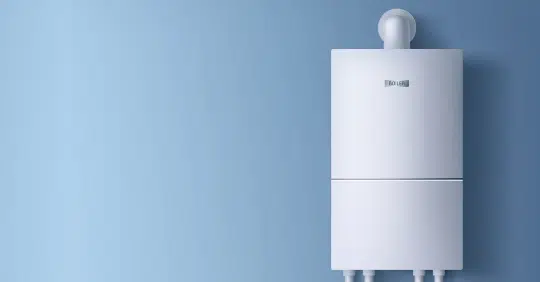
A tankless water heater takes a completely different approach. It heats water on demand. When you open a hot water tap, cold water flows through a heat exchanger powered by gas or electricity. The unit heats water instantly and delivers it directly to the fixture. There’s no storage tank and no standby loss.
The practical difference is simple. A tank system gives you a fixed supply of hot water that can run out during heavy use. A tankless system provides a continuous stream of hot water, limited only by its flow rate capacity. Both get the job done, but how they get there affects your energy bills, available space, and long-term costs.
Upfront Cost vs. Long-Term Savings
Tank water heaters are the more affordable option upfront. A standard unit costs between $500 and $1,200, plus installation labor. The installation is straightforward because most homes are already set up for a tank system.
Tankless water heaters cost more initially, typically $1,000 to $4,250 including installation. The higher price reflects the unit itself and the additional work often required, such as upgraded gas lines, new venting, or electrical modifications.
But here’s where the math shifts. According to the U.S. Department of Energy, tankless systems use 24% to 34% less energy than tank models in homes that consume 41 gallons or less per day. That translates to roughly $44 per year in energy savings. Over a tankless unit’s 15- to 20-year lifespan, those savings add up significantly.
We tell our customers to think of a tankless water heater as a long-term investment. The upfront cost is higher, but lower monthly bills and a longer lifespan help recoup that difference over 10 to 20 years. If you plan to stay in your home for a while, the numbers often favor going tankless.
Energy Efficiency and Monthly Operating Costs
Tank water heaters lose an estimated 10% to 15% of their energy to standby heat loss. The unit cycles on and off throughout the day and night, reheating water whether you need it or not. That constant cycling raises your gas or electric bill every month.
Tankless water heaters eliminate standby loss entirely. The system only activates when you open a hot water tap. No demand, no energy used. High-efficiency condensing tankless models go a step further by recapturing heat from exhaust gases, squeezing even more efficiency out of every therm of gas.
For homeowners comparing monthly operating costs, the difference is noticeable. A tankless system can cut water heating energy use by up to 34% for average households and up to 60% compared to older electric tank models. That’s real money back in your pocket each month, and lower carbon emissions, too.
We regularly help homeowners in the Inland Empire evaluate their current energy costs and estimate what they’d save by switching to a tankless unit. If you’re curious about your specific situation, we offer free in-home estimates with no obligation.
Performance, Lifespan, and Maintenance Compared
Hot Water Performance
A tank water heater delivers hot water until the tank empties. In a busy household, morning showers back to back, dishwasher running, laundry going, a 50-gallon tank can run out fast. You then wait 30 to 60 minutes for the tank to reheat.
A tankless water heater never runs out. It heats water continuously as long as demand stays within the unit’s flow rate (measured in gallons per minute). The trade-off: if too many fixtures run simultaneously, flow rate may drop and water temperature can fluctuate.
Lifespan
Tank water heaters typically last 8 to 12 years. Mineral buildup, corrosion, and sediment shorten their life, especially in areas with hard water. Tankless units last 15 to 20 years on average, with many lasting even longer with proper care.
Maintenance
Tank models need annual flushing to remove sediment buildup. Anode rods require inspection and replacement every few years. Neglecting these tasks accelerates corrosion and can cause leaks.
Tankless systems require less maintenance overall. Annual descaling is recommended, particularly in hard water areas. But there are fewer parts prone to failure, and the risk of a catastrophic tank leak, which can cause serious water damage, is eliminated entirely.
Which Water Heater Is Best for Inland Empire Homes?
Southern California’s warm climate gives tankless water heaters a natural advantage. Incoming water temperatures in the Inland Empire are warmer than in colder regions, which means tankless units don’t have to work as hard to reach your desired temperature. That improves efficiency and flow rate performance.
For homes in Rancho Cucamonga, Upland, Fontana, Ontario, and surrounding cities, we often recommend tankless systems for households of two to three people with moderate hot water use. These homes see the best return on investment because daily consumption stays within the 41-gallon threshold where tankless efficiency gains are highest.
Larger families with four or more people running multiple showers, appliances, and fixtures at the same time may still benefit from a high-capacity tank water heater, or a setup with multiple tankless units. Space is another factor. Tankless units mount on a wall and free up valuable floor space, which matters in smaller homes or tight utility areas.
We’ve served the Inland Empire since 2005, and we’ve seen what works best in local homes. Hard water is common in this area, so whatever system you choose, routine maintenance is important to protect your investment.
How To Choose the Right Water Heater for Your Household
Start with three questions:
How much hot water does your household use daily? Smaller households (one to three people) with staggered hot water use are ideal candidates for tankless. Larger households with heavy simultaneous demand may need a tank or multiple tankless units.
What fuel source is available? Gas tankless models generally outperform electric ones in flow rate and efficiency. But if your home doesn’t have a gas line or adequate venting, electric tank or tankless options may make more sense.
What’s your budget, short-term and long-term? If upfront cost is your main concern, a tank water heater is the practical choice. If you’re focused on energy savings and a longer-lasting system, tankless pays off over time.
When sizing a tankless unit, focus on flow rate measured in gallons per minute (GPM). Add up the GPM of all fixtures you’d run at the same time, a shower typically uses 2 GPM, a kitchen faucet about 1.5 GPM, and choose a unit that matches or exceeds that total.
For tank systems, match the tank size to your household. A 40-gallon tank works for two to three people. Families of four or more typically need 50 to 80 gallons.
We always recommend a professional assessment before purchasing either system. Venting requirements, gas line capacity, and electrical panel upgrades can affect total cost. Our team evaluates all of this during a free estimate so there are no surprises.
Let Ramco Help You Pick the Right Water Heater
Both tank and tankless water heaters have clear strengths. Tanks cost less upfront and handle high simultaneous demand well. Tankless units save energy, last longer, and take up less space. The best choice depends on your household’s size, budget, and hot water habits.
At Ramco Plumbing, Heating & Air, we install and service both tank and tankless water heaters across Rancho Cucamonga and the greater Inland Empire. Call us or book a free estimate online, we’ll help you find the right fit for your home.
Frequently Asked Questions
Is a tankless water heater worth it in Rancho Cucamonga?
Yes. The Inland Empire’s warm incoming water temperatures improve tankless efficiency. Households using 41 gallons or less per day can save 24% to 34% on water heating energy costs compared to tank models.
How long does a tankless water heater last?
Most tankless units last 15 to 20 years with proper maintenance, compared to 8 to 12 years for standard tank models.
Can a tankless water heater supply enough hot water for a large family?
It depends on simultaneous demand. A single tankless unit handles two to three fixtures at once. Larger families may need a high-capacity unit or multiple tankless systems installed in parallel.
Does Ramco Plumbing install both tank and tankless water heaters?
Yes. We install, repair, and maintain both types. We also provide free in-home estimates so you can compare options and costs before making a decision.
Does hard water in the Inland Empire affect water heaters?
Yes. Hard water causes mineral buildup in both tank and tankless systems. Annual flushing (for tanks) and descaling (for tankless) help prevent damage and extend the life of your unit.