Hard water in the Inland Empire is one of the most common, and most overlooked, causes of plumbing damage in local homes. If you live in Rancho Cucamonga or any of the surrounding IE cities, there’s a good chance your water is loaded with dissolved calcium and magnesium. These minerals build up silently inside your pipes, water heater, and appliances, causing problems that get expensive fast. At Ramco Plumbing, Heating & Air Conditioning, we see the effects of hard water every single day. Here’s what you need to know about it, how to spot it, and what you can actually do to protect your home.
What Hard Water Is and Why the Inland Empire Has It So Bad
Hard water contains high levels of dissolved minerals, primarily calcium and magnesium. Water hardness is measured in parts per million (ppm) or grains per gallon (gpg). The higher the number, the harder the water.
So why is hard water such a big deal here? The Inland Empire sits over mineral-rich groundwater basins. Cities like San Bernardino, Riverside, Fontana, and Rancho Cucamonga all draw from local aquifers where water passes through layers of calcium- and magnesium-heavy soil and rock. Imported water supplies that travel long distances through mineral-bearing terrain add to the problem.
The result: IE tap water is consistently among the hardest in Southern California. Local water agencies report hardness levels well above the threshold that causes scaling and appliance wear. We’ve worked in homes across the IE where scale buildup was so severe it had nearly closed off supply lines. This isn’t a minor inconvenience, it’s an ongoing threat to your plumbing system.
How Hard Water Damages Your Pipes and Appliances
Hard water damage to pipes happens gradually. Mineral deposits, called scale or limescale, coat the inside walls of your plumbing over months and years. That buildup narrows pipe diameter, restricts water flow, and increases pressure on joints and fittings.
Here’s where it hits hardest:
- Water heaters: Scale collects on heating elements and tank walls. Your unit works harder to heat the same amount of water, driving up energy bills. Tank water heaters and tankless units both suffer, tankless heaters can lose efficiency or throw error codes when scale blocks heat exchangers.
- Pipes: Galvanized steel and copper lines develop internal scale layers that choke off flow. Joints and elbows are especially vulnerable.
- Fixtures and valves: Mineral crust restricts movement in shut-off valves, causes faucet cartridges to fail, and blocks aerators.
- Appliances: Dishwashers, washing machines, and ice makers develop clogged water lines and scaled heating elements. Breakdowns become more frequent.
We’ve pulled water heater elements from IE homes that were completely encased in white mineral deposits, sometimes after just 3–4 years of service. Hard water damage to pipes and appliances is cumulative. The longer it goes untreated, the more expensive the repairs.
Warning Signs of Hard Water Problems in Your Home
You don’t need a lab test to spot hard water problems. Most of the signs are visible around your house right now.
Look for white, chalky residue on faucets, showerheads, and glass shower doors. That crusty buildup is mineral scale, and it’s forming inside your pipes too. Soap scum that won’t scrub off tubs, sinks, and dishes is another telltale sign.
Hard water also affects your body. If your skin feels dry or itchy after showering, or if conditions like eczema seem worse, hard water minerals could be a factor. Your laundry may come out stiff, dull, or with faded colors because the minerals interfere with detergent.
Pay attention to water pressure changes. If flow seems weaker at certain fixtures or inconsistent throughout the house, scale may be restricting your supply lines. Rising water-heating costs with no change in usage patterns often point to a scaled-up water heater working overtime.
Any one of these signs warrants a closer look. Multiple signs together? That’s a strong indication your plumbing is under stress from hard water.
Hard Water Problems California Homeowners Face in Older IE Homes
Hard water problems in California are especially common in older Inland Empire homes built during the 1970s through early 2000s. Many of these houses were plumbed with galvanized steel pipes, a material that’s particularly vulnerable to mineral buildup and corrosion.
Galvanized pipes develop heavy internal scaling over decades. We’ve cut into supply lines in Ontario, Upland, and Fontana homes where the interior opening had narrowed to the size of a pencil. That kind of restriction tanks water pressure, stresses joints, and leads to leaks.
Older copper piping fares better but still accumulates scale, especially at elbows and connections. Legacy water heaters in these homes often show thick limescale deposits that shorten their service life by years compared to the same equipment running on soft water.
Valves and shut-offs in older homes are also at risk. We regularly find gate valves and supply stops that are frozen in place from mineral crust, a real problem during an emergency when you need to shut water off fast.
In advanced cases, we recommend partial or whole-house repiping. When mineral buildup and corrosion have compromised the integrity of the system, patching individual sections doesn’t solve the underlying problem. Pairing new piping with a water softener protects that investment for the long term.
Prevention and Treatment Options for Hard Water
The first step is knowing how hard your water actually is. You can pick up a home test kit at any hardware store, or we can test your water during a service call. Once you know your hardness level in ppm or gpg, you can make an well-informed choice about treatment.
There are two main approaches: treat the water at the source, or manage the damage through regular maintenance. Ideally, you do both.
Manual descaling, scrubbing fixtures, soaking showerheads in vinegar, and running cleaning cycles on appliances slows visible damage. But it does nothing to protect the pipes and equipment you can’t see. For real protection, you need a system that addresses hardness before the water reaches your plumbing.
Water Softeners and Whole-Home Filtration Systems
Salt-based water softeners use ion exchange to replace calcium and magnesium with sodium or potassium. They produce genuinely soft water that prevents scaling, improves soap performance, and extends the life of your pipes and appliances. These are the most effective option for the hardness levels we see across the Inland Empire.
Salt-free conditioners don’t remove minerals. Instead, they change how calcium crystallizes, so it’s less likely to stick to surfaces. These are lower maintenance and don’t add sodium to your water, but they’re less effective in areas with very hard water.
Whole-home filtration systems target sediment, chlorine, chloramine, and other contaminants. Many homeowners combine filtration with a softener or conditioner to address both water quality and hardness in one setup.
The right system depends on your hardness level, pipe material, household size, and water usage. We help IE homeowners evaluate their options and install the system that fits their home and budget.
Professional Pipe Maintenance and Flushing
Even with a softener installed, existing scale doesn’t disappear on its own. Professional maintenance clears out what’s already there and keeps your system running efficiently.
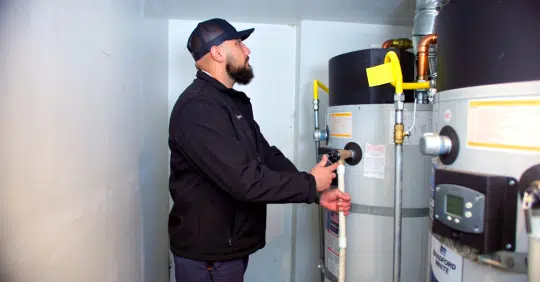
Water heater flushing should happen annually. We drain the tank, flush out accumulated sediment and scale, and inspect the anode rod and connections. For tankless units, we run a descaling solution through the heat exchanger to restore full efficiency.
Plumbing inspections catch early signs of scale-related restriction, failing valves, and weakened supply lines before they turn into emergencies. We check water pressure, inspect accessible piping, and test shut-off valves.
For homes with significant buildup, we can perform chemical or mechanical descaling on certain pipe sections. And when the damage is too far gone, something we see often in older IE housing stock, repiping combined with a softener installation gives you a clean slate.
At Ramco Plumbing, Heating & Air Conditioning, we offer free in-home estimates with upfront pricing. If you’re dealing with hard water issues in your Rancho Cucamonga home or anywhere in the Inland Empire, give us a call. We’ll assess your situation and walk you through your options, no pressure, no hidden fees.