
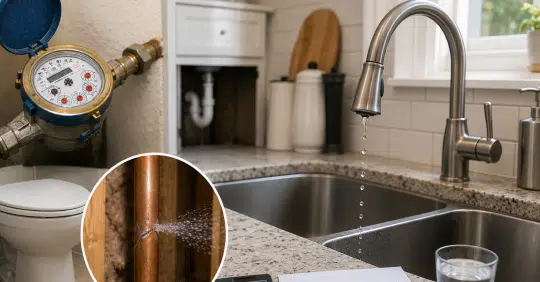
Got a high water bill that doesn’t add up? You’re not alone. Most sudden spikes in Rancho Cucamonga homes trace back to one cause: a leak. The EPA estimates the average household wastes nearly 10,000 gallons a year from leaks, and silent ones can quietly add hundreds of dollars to your bill before you notice.
At Ramco Plumbing, Heating & Air Conditioning, we’ve spent over two decades helping Inland Empire homeowners find and fix these problems fast. This guide walks you through high water bill leak detection step by step, so you know what to check, what to fix, and when to call us.
Common Reasons Your Water Bill Suddenly Spiked
A sudden jump in your water bill almost always points to a leak, but a few other causes are worth ruling out first. Seasonal overwatering of lawns, a faulty water meter, or a simple billing error can all push your bill higher than expected.
That said, leaks remain the top reason. Toilets alone account for roughly 25% of indoor water use, and a silent toilet leak can waste up to 200 gallons a day. Dripping faucets, worn washing machine hoses, irrigation breaks, and aging supply lines are also frequent culprits we see in homes across Rancho Cucamonga and Fontana.
If your usage doubled overnight without any change in habits, treat it as a leak until proven otherwise. The longer hidden water loss runs, the more damage it can cause to flooring, drywall, and your foundation.
How to Use Your Water Meter to Confirm a Leak
Your water meter is the fastest tool for confirming a leak. It sits in a covered box near the curb or sidewalk, usually at the front of the property.
Here is the test we recommend to homeowners:
- Shut off every water source in the home, including faucets, the dishwasher, washing machine, ice maker, and irrigation.
- Open the meter lid and write down the current reading. Look for the small triangular or star-shaped flow indicator. If it’s spinning with everything off, water is moving somewhere.
- Wait one to two hours without using any water, then recheck the reading.
If the numbers changed or the indicator kept spinning, you have a leak. This same test helps our technicians confirm the issue before we start narrowing down the location.
The Most Common Indoor Leaks to Inspect First
Once the meter confirms a leak, start indoors. Most household leaks come from a handful of fixtures, and many are easy to spot with a quick walk-through.
Silent Toilet Leaks
Toilets are the number one source of hidden water loss. A worn flapper lets water trickle from the tank into the bowl without a sound.
To test, remove the tank lid and add a few drops of food coloring or a dye tablet. Wait 15 to 20 minutes without flushing. If color shows up in the bowl, the flapper needs to be replaced. It’s a low-cost fix that can drop your bill noticeably the next month.
Dripping Faucets, Showerheads, and Appliance Lines
Check every faucet and showerhead for slow drips, especially at night when the house is quiet. A single drip per second wastes more than 3,000 gallons a year.
Look under sinks for damp cabinets or warped wood. Pull out your washing machine and dishwasher and inspect the supply hoses for cracks, bulges, or rust. Don’t skip the water heater, check the base for puddles, rust streaks, or signs of corrosion at the connections. These small issues are some of the most common repairs we handle for Inland Empire homeowners.
Hidden Leaks: Slab, Underground, and Irrigation Issues
If indoor fixtures check out but your meter still shows water moving, the leak is likely outside or under the slab. These are harder to find but leave clues.
Walk your yard and look for unusually green patches, soggy spots, or small sinkholes. Weak sprinkler pressure or zones that never fully dry out often point to a cracked irrigation line. Inside the home, warm spots on tile floors, the sound of running water under concrete, or unexplained cracks in drywall can all signal a slab leak.
Slab and main line leaks aren’t DIY territory. They sit beneath concrete or several feet of soil, and guessing wrong means tearing up the wrong area. This is where professional leak detection equipment pays for itself.
When to Call a Professional Leak Detection Plumber
Call a professional when your meter confirms a leak but your DIY inspection comes up empty, or when you suspect a slab, underground, or main line issue. Guesswork at that stage usually costs more than the repair itself.
Our Ramco technicians use acoustic listening devices, thermal imaging, and in-pipe cameras to pinpoint leaks without unnecessary digging or demolition. We’ve used these tools on homes from Alta Loma to Etiwanda, and they let us find the exact spot, not just the general area. That precision saves your floors, your landscaping, and your budget.
We also recommend asking your water utility for a meter check or a one-time leak adjustment once the repair is done. Many providers in San Bernardino County offer this credit when you can show proof of repair.
If you’d like a second set of eyes, we offer free in-home estimates with upfront pricing and a 60 to 90 minute response window across the Inland Empire.
Your Next Step Toward a Lower Water Bill
A high water bill is rarely random. Run the meter test, check your toilets and fixtures, and walk the yard. If anything looks off and you’re in Rancho Cucamonga or nearby, contact Ramco Plumbing, Heating & Air and we’ll handle the rest. Consider it handled.d.
Frequently Asked Questions
The EPA estimates leaks waste about 10,000 gallons per home each year, and roughly 10% of homes have leaks wasting 90 gallons or more daily.
Yes. Inland Empire summers push irrigation use up sharply. But if your bill spikes outside of peak watering season, suspect a leak first.
We guarantee a 60 to 90 minute arrival window across Rancho Cucamonga and surrounding cities, with 24/7 emergency availability year-round.
Many San Bernardino County and Inland Empire water agencies offer a one-time leak adjustment after you submit proof of repair. Ask your utility about their specific policy.
Yes, especially for slab or underground leaks. Acoustic and thermal tools locate the exact spot, which prevents unnecessary cutting into floors, walls, or landscaping and lowers the total repair cost.