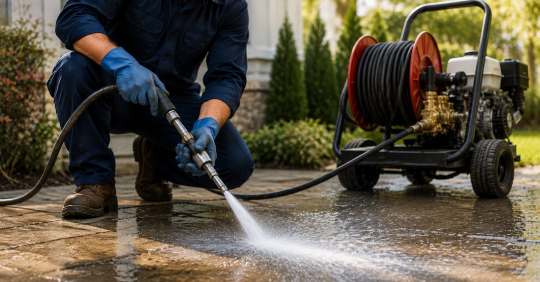
Hydro-jetting is the most effective drain cleaning method available to homeowners today. It uses high-pressure water streams, ranging from 2,000 to 4,000 PSI, to blast through stubborn clogs, grease buildup, and even tree root intrusions inside your drain and sewer pipes. Unlike chemical drain cleaners or basic snaking, hydro-jetting scours pipe walls clean without leaving residue behind.
At Ramco Plumbing, Heating & Air Conditioning, we use hydro-jetting regularly for homeowners across Rancho Cucamonga and the Inland Empire. This guide breaks down how the process works, what problems it solves, and how to know if it’s the right solution for your plumbing issue.
How Hydro-Jetting Works Step by Step
Hydro-jetting follows a clear process that starts with diagnosis and ends with a fully cleaned pipe. Here’s what happens during a typical service call.
Step 1: Camera inspection. Before we send any water through your pipes, we run a sewer camera or use a snake to locate the clog and assess the condition of the pipe. This step is critical; it tells us whether hydro-jetting is safe for your specific plumbing.
Step 2: Access the line. We insert a specialized nozzle into the pipe through a cleanout or drain access point. The nozzle connects to a high-pressure hose and water supply.
Step 3: High-pressure cleaning. Pressurized water shoots forward through the nozzle to cut through clogs, including grease, roots, and mineral scale. At the same time, rear-facing jets scour the pipe walls, pushing loosened debris downstream.
Step 4: Gravity does the rest. All that broken-up material flushes out naturally through the pipe. What’s left behind is a clean, clear line, no chemical residue, no remaining buildup.
The entire hydro-jetting process typically takes one to two hours, depending on the severity and location of the blockage.
Hydro-Jetting vs. Snaking: Which Method Do You Actually Need?
Both hydro-jetting and drain snaking clear clogs, but they work very differently. A drain snake (also called an auger) physically breaks through the blockage. It’s effective for soft clogs, think hair or a minor food buildup. But snaking only punches a hole through the obstruction. It doesn’t clean the pipe walls, so residue stays behind and clogs tend to return faster.
Hydro-jetting removes everything. The pressurized water strips grease, silt, roots, and scale off the interior walls of the pipe. The result is a line that’s as close to new as possible.
| Aspect | Hydro-Jetting | Snaking |
|---|---|---|
| Effectiveness | Cleans entire pipe wall | Clears main blockage only |
| Best For | Stubborn buildup, recurring clogs, maintenance | Quick, soft clogs |
| Residue Left Behind | None | Often remains |
| Cost | Higher upfront | Lower upfront |
We recommend snaking for simple, one-time clogs. But if you’re dealing with repeated backups or heavy grease and root intrusion, hydro-jetting is the better long-term investment. We see this firsthand with homeowners near Foothill Boulevard and throughout older neighborhoods in Rancho Cucamonga, where mature tree roots often invade sewer lines.
Key Benefits of Hydro-Jetting for Residential Plumbing
Hydro-jetting offers several advantages that make it stand out from other drain cleaning methods.
Complete pipe cleaning. The high-pressure water doesn’t just clear the clog, it removes grease, mineral scale, and root fragments from the entire pipe wall. This level of cleaning prevents future blockages from forming quickly.
Eco-friendly. Hydro-jetting uses only water. No harsh chemicals enter your plumbing or the local water system. For homeowners who care about environmental impact, this matters.
Versatile across pipe types. It works on kitchen drains, main sewer lines, and secondary lines. We use it for both residential and commercial properties.
Prevents costly backups. Regular hydro-jetting as preventive maintenance can save you from emergency plumbing calls. Sewer backups cause water damage, health hazards, and expensive repairs. One proactive cleaning session can keep your pipes clear for months or even years.
Common Problems Hydro-Jetting Can Solve
Hydro-jetting handles the toughest drain and sewer problems that other methods can’t fully resolve.
Grease buildup. Kitchen drains accumulate grease over time, even if you’re careful about what goes down the sink. Hydro-jetting strips grease from pipe walls completely.
Tree root intrusion. Roots grow into sewer lines through tiny cracks or joints. The high-pressure stream cuts through small to medium root masses and flushes them out. For severe root damage, we may recommend additional repairs after jetting.
Hair and soap scum. Bathroom drains clog with hair, soap residue, and skin oils. Snaking helps temporarily, but hydro-jetting clears the full buildup.
Silt and sediment. Inland Empire homes sometimes deal with mineral-heavy water and sediment accumulation. Hydro-jetting removes these deposits effectively.
Foreign objects. Baby wipes, paper towels, and other items that shouldn’t be flushed can cause serious blockages. Hydro-jetting can dislodge and flush these out when they’re caught in grease or buildup.
When Hydro-Jetting Isn’t the Right Fit for Your Pipes
Hydro-jetting is powerful, but it’s not appropriate for every situation.
Fragile or deteriorated pipes. Older homes with clay, cast iron, or Orangeburg pipes that have already weakened may not withstand 2,000–4,000 PSI of water pressure. The force could crack or collapse a pipe that’s already compromised. That’s why the camera inspection before jetting is so important, it identifies pipe condition before any cleaning begins.
Minor, one-time clogs. If you have a simple hair clog in a bathroom sink, snaking is faster, cheaper, and perfectly effective. There’s no reason to use hydro-jetting on a problem that a $150 service call can handle.
Collapsed or broken pipes. If a section of pipe has already collapsed, hydro-jetting won’t fix the structural problem. You’ll need a pipe repair or replacement.
Our plumbers always assess the situation before recommending hydro-jetting. We adjust water pressure based on pipe material and condition, and we’ll tell you honestly if a simpler fix will do the job.
How to Know It’s Time to Call a Professional
Certain warning signs indicate you need professional hydro-jetting rather than a store-bought drain cleaner or a plunger.
Slow drains throughout the house. If multiple fixtures drain slowly, the issue is likely in your main sewer line, not an individual drain.
Recurring clogs. A clog that keeps coming back after snaking suggests buildup that only hydro-jetting can fully remove.
Sewage smells. Foul odors coming from drains or your yard often signal a blockage or buildup in the sewer line.
Gurgling sounds. Air trapped in partially blocked pipes creates gurgling noises when water flows. This is an early warning sign of a developing blockage.
Sewage backups. If sewage backs up into your home, call immediately. At Ramco Plumbing, we offer 24/7 emergency plumbing service with 60–90 minute response times in Rancho Cucamonga and surrounding areas.
Hydro-jetting requires professional-grade equipment that produces thousands of PSI. This is not a DIY job. The equipment is dangerous without training, and improper use can damage your pipes.
Hydro-Jetting FAQs for Rancho Cucamonga Homeowners
Is hydro-jetting safe for residential pipes?
Yes, hydro-jetting is safe for most residential pipes in good condition. A professional plumber inspects the pipe with a camera before jetting to confirm the pipe can handle the pressure. Older or damaged pipes may require a different approach.
How often should I schedule hydro-jetting?
For most homes, hydro-jetting every one to two years as preventive maintenance keeps drains clear. Properties with heavy tree root exposure or older sewer lines may benefit from annual service.
Can hydro-jetting remove tree roots from sewer lines?
Hydro-jetting cuts through small to medium tree roots and flushes them out. Large root masses may require mechanical cutting first, followed by hydro-jetting to clean the remaining debris.
Does Ramco Plumbing offer hydro-jetting in Rancho Cucamonga?
Yes. Ramco Plumbing, Heating & Air Conditioning provides hydro-jetting services throughout Rancho Cucamonga, Upland, Fontana, and the broader Inland Empire area. We offer free estimates and 24/7 emergency availability.
Will hydro-jetting damage my landscaping or yard?
No. Hydro-jetting is performed through existing cleanout access points or drain openings. There’s no digging involved, so your yard and landscaping stay intact.
Clear Pipes Start with the Right Drain Cleaning Method
Hydro-jetting delivers a level of pipe cleaning that no other method matches. It removes grease, roots, scale, and debris from the full diameter of your drain and sewer lines, leaving them clean and free-flowing.
If you’re dealing with slow drains, recurring clogs, or sewer line issues, contact Ramco Plumbing, Heating & Air Conditioning for a free estimate. We’ll inspect your pipes, recommend the right solution, and give you upfront pricing before any work begins.